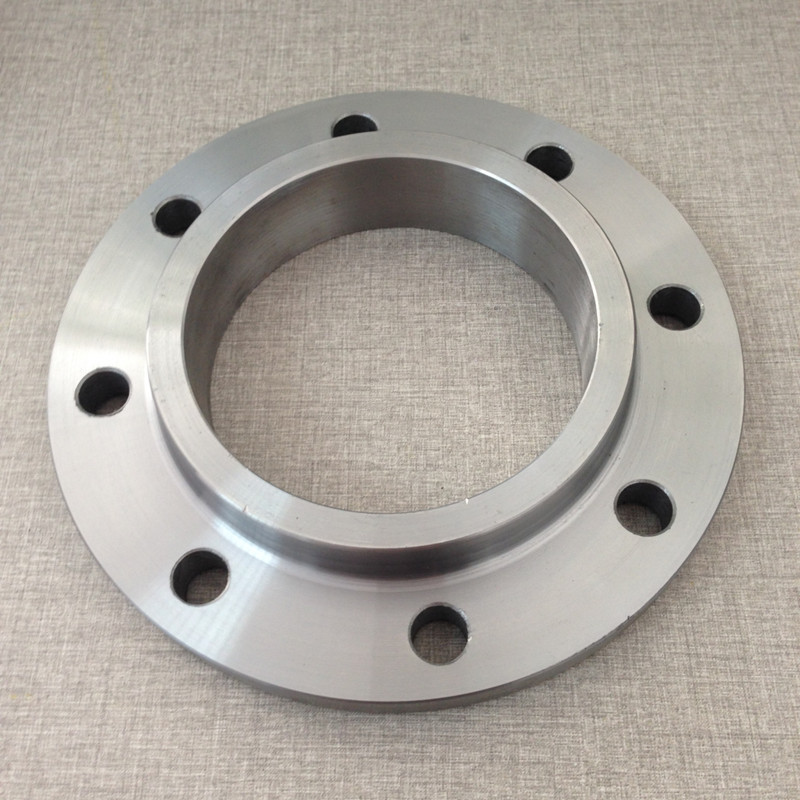
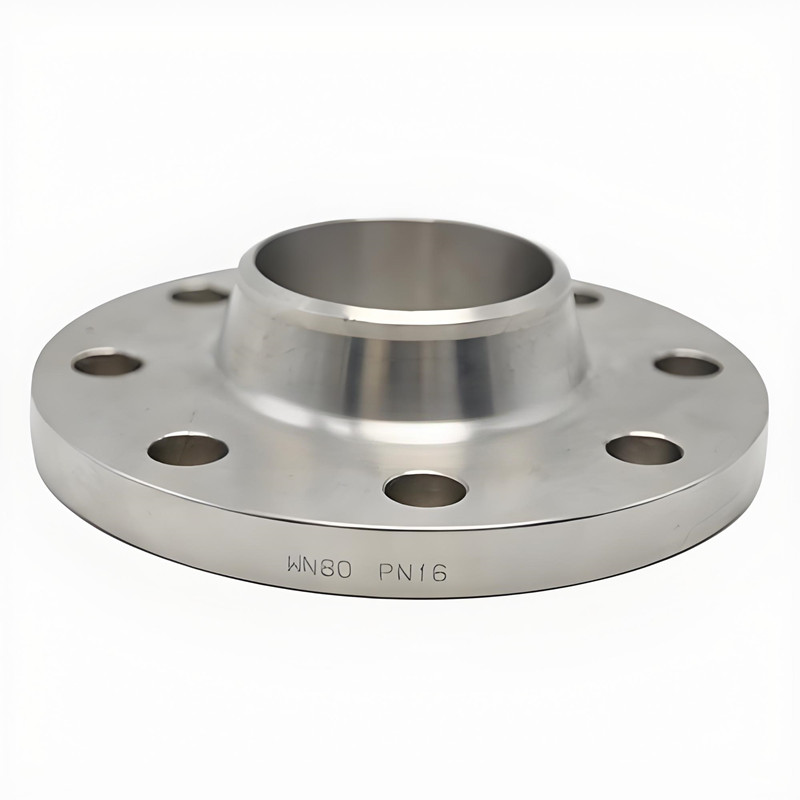
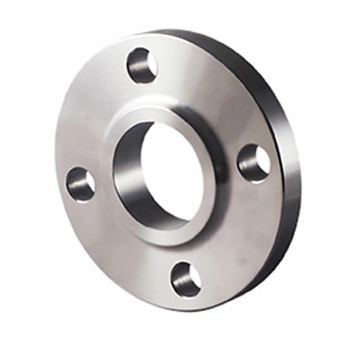
Choosing a slip-on flange starts with clearly defining the operating conditions. First check the design pressure and temperature; if the pressure exceeds ASME 600# or the temperature falls outside the normal range for carbon or stainless steel, consider weld-neck or specialized alloys. Next, evaluate the medium: mildly corrosive fluids allow carbon steel with coating, while seawater or aggressive chemicals call for 316L, duplex 2205/2507, or Hastelloy, all materials offered by leading flange manufacturer in china. Finally, decide whether the joint will be dismantled often—frequent removal favors lap-joint construction, whereas permanent installations suit a standard slip-on.

Material selection follows the environment. Carbon steel (A105 or Q235B) is the low-cost option for water, air, and low-pressure steam. Stainless 304/316L adds corrosion resistance for chemical, food, and marine atmospheres. Duplex grades 2205 and 2507 handle high-chloride or offshore duties at higher cost but with greatly extended life. High-temperature steam lines may require alloy steels such as F11 or F22.
Flange facing must match the service. Flat-face (FF) is limited to low-pressure water systems and is often paired with cast-iron equipment. Raised-face (RF) is the workhorse for most chemical and steam applications up to Class 600. Ring-type joint (RTJ) provides metal-to-metal sealing for Class 900 and above. Lap-joint facings allow the stub-end to rotate, making them ideal when the line must be opened repeatedly for cleaning or inspection.

Cost and maintenance considerations drive the final decision. Where budgets are tight and the joint will not be disturbed, slip-on RF carbon steel is the simplest choice. If corrosion is severe but dismantling is rare, slip-on RF in 316L offers long service life. Food, pharmaceutical, or offshore platforms that demand frequent disassembly justify the higher initial cost of lap-joint stainless or duplex assemblies that can be quickly removed and reinstalled.
What are the common connection methods of carbon steel elbowsAugust 25, 2025Of course. The connection method of a carbon steel elbow is crucial as it determines the integrity, pressure rating, maintainability, and cost of the piping system.Here are the common connection metho...view
Butt Weld vs. Socket Weld pipe Fittings: How to Choose the Right Type for Carbon Steel Pipes?August 12, 2025When it comes to carbon-steel systems, the short answer is: use butt-weld fittings for permanent, high-integrity joints in large-diameter or high-pressure lines; use socket-weld fittings only for smal...view
Could a simple threaded pipe fittings connection solution save your next project?April 28, 2025A single improperly connected threaded joint can leak gallons per hour. At Silver Valley, our precision-threaded fittings ensure leak-tight seals from -50°C to 300°C.Threaded pipe fittings are conne...view
Turkey Tuz Lake Natural Gas Storage Expansion ProjectMarch 31, 2025August 27, 2021, Lake Tuz, Turkey - The expansion project of the Lake Tuz natural gas reservoir in Turkey, undertaken by a Chinese company, has made important progress recently. As the core part of th...view
Nigeria-Morocco Natural Gas Pipeline ProjectMarch 31, 2025On November 9, 2024, the Nigeria-Morocco natural gas pipeline project was officially launched, marking the entry of this major energy project across West Africa and North Africa into the implementatio...view
Seamless oil casing and tubing-The Key Difference Between Oilfield Success And Costly Failure?April 28, 2025A collapsed casing caused a $30 million well abandonment in Texas last year. At Silver Valley, our API 5CT-certified pipes prevent such disasters with industry-leading performance.Casing pipes are lar...view