Email Us

Butt Weld vs. Socket Weld pipe Fittings: How to Choose the Right Type for Carbon Steel Pipes?

Table of Content [Hide]

    When it comes to carbon-steel systems, the short answer is: use butt-weld fittings for permanent, high-integrity joints in large-diameter or high-pressure lines;


    use socket-weld fittings only for small-bore (≤ 2") utility lines where quick assembly and compactness matter more than ultimate strength.


    Below is a concise, field-oriented comparison based on the latest industry data and standards for butt weld and socket weld applications. 

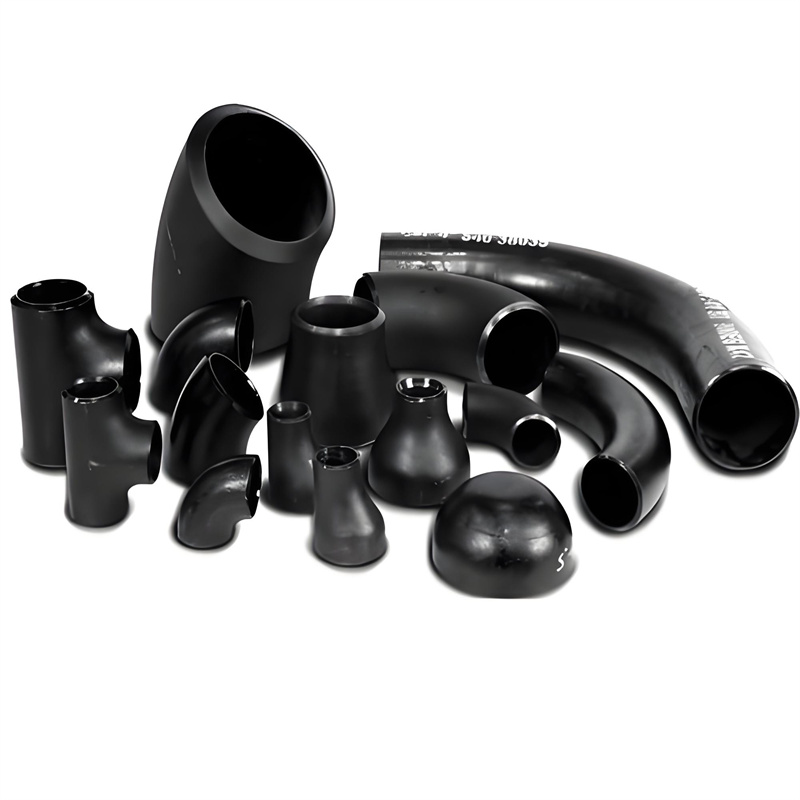
    Butt-weld pipe fittings

    Strength & Fatigue Life

    • Butt weld (BW): full-penetration groove weld creates a joint that is as strong as the parent pipe itself; ideal for cyclic service and high stress.

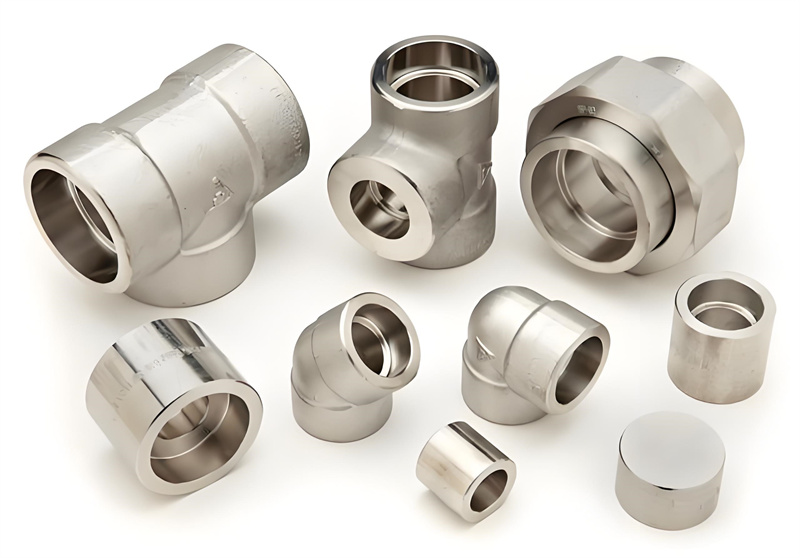
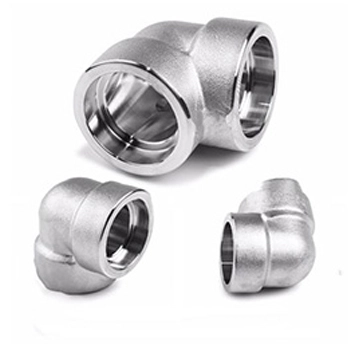
    • Socket weld (SW): fillet-welded socket introduces a stress-raiser at the toe of the fillet; fatigue life is 30–50 % lower than an equivalent BW joint in carbon steel.


    Pressure & Temperature Rating

    • BW: unlimited size, schedules 10–XXS; routinely used up to 6 000 psi and 750 °F in A105/A234-WPB carbon steel.

    • SW: limited to ASME B16.11 Class 9000 (≈ 3 700 psi at 100 °F) and normally applied only to NPS ½–2 piping.


    Carbon steel pipe fittings

    Internal Flow & Corrosion

    • BW: smooth, continuous bore eliminates turbulence and crevice corrosion—critical in sour oil & gas or high-purity steam.

    • SW: small internal crevice at the bottom of the socket can trap fluid and promote localized corrosion in carbon steel.


    Size Range

    • BW: ½"–72" and beyond.

    • SW: rarely stocked above 2" because economics and mechanical integrity favor BW as diameter increases.


    Code & Industry Practice

    • BW: governed by ASME B16.9; mandatory for ASME B31.3 Category M (severe cyclic) service.

    • SW: governed by ASME B16.11; typically limited to utility water, instrument lines, and low-risk chemical piping.


    References

    Related News

    • How to Choose a Right Slip-On FlangeHow to Choose a Right Slip-On FlangeAugust 25, 2025Choosing a slip-on flange starts with clearly defining the operating conditions. First check the design pressure and temperature; if the pressure exceeds ASME 600# or the temperature falls outside th...view
    • Why are seamless tubes used in boiler pipes?Why are seamless tubes used in boiler pipes?September 18, 2025Seamless tubes are used in boiler pipes because they offer uniform strength, higher pressure tolerance, and better integrity under extreme temperature and pressure conditions compared to welded altern...view
    • Iraq Dongba Oilfield ProjectIraq Dongba Oilfield ProjectMarch 31, 2025At the Iraq Dongba Oilfield Project Base, the first batch of high-strength seamless steel pipes and pipe fittings provided by At the Iraq Dongba Oilfield Project Base, the first batch of high-strength...view
    • What are the common connection methods of carbon steel elbowsWhat are the common connection methods of carbon steel elbowsAugust 25, 2025Of course. The connection method of a carbon steel elbow is crucial as it determines the integrity, pressure rating, maintainability, and cost of the piping system.Here are the common connection metho...view
    • Saudi Arabia NEOM ProjectSaudi Arabia NEOM ProjectMarch 31, 2025On May 22, 2024, Silver Valley Technology successfully reached a cooperation intention with Saudi Arabia's NEOM project. Our company undertook the supply of some seamless steel pipe materials and ...view
    • Seamless Steel Pipes in the Oil and Gas Industry: Applications and RolesSeamless Steel Pipes in the Oil and Gas Industry: Applications and RolesAugust 12, 2025Seamless steel pipes play a critical role in the oil and gas industry, offering superior performance that makes them essential for exploration, extraction, transportation, and processing. Below are th...view

    Related Products

    Call
    0317-5636199
    Address
    Lijiapu Industrial Zone, Cangzhou City, Hebei Province, China